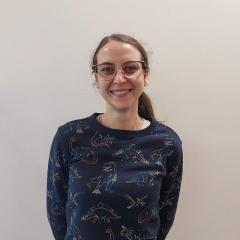
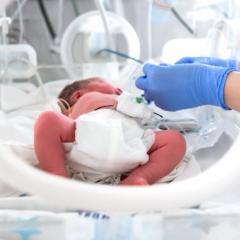
Professor Nicholas Fisk
Nicholas Fisk is Executive Dean of the Faculty of Health
Sciences at the University of Queensland, and a maternal-fetal
medicine specialist at the Royal Brisbane and Women's Hospital.
Previously he was the inaugural Director of the University of
Queensland's new state of the art $70M Centre for Clinical Research
on the Herston campus, before becoming Executive Dean of Health
Sciences in 2010. He practices as a maternal-fetal medicine
specialist / high risk obstetrician at the Royal Brisbane and
Women's Hospital, and maintains a research group in UQCCR.
Between 1992-2007 he was Professor of Obstetrics /Fetal Medicine
at Imperial College & Queen Charlotte's Hospital, London, where
his laboratory and clinical research program achieved an
international reputation in fetal diagnosis and treatment. His main
research interests have been in human fetal mesenchymal stem cell
biology and monochorionic multiple pregnancy, but also spanned
non-invasive prenatal diagnosis, fetal nociception, caesarean
section, preterm labour, obstetric ultrasound and drug development
in obstetrics. A fetal-medicine subspecialist with an MBA and a PhD
in fetal physiology, he has authored nearly 400 publications, and
is a past President of the International Fetal Medicine and Surgery
Society. He reviews for numerous international grant bodies, and is
a member of several editorial boards including PLoS Medicine.
He is passionate about the opportunities offered in UQCCR, to
drive clinical research in a "bench to bedside" and "bedside to
bench" environment, to link wet and dry laboratories with patients,
and basic with clinical scientists, and to foster the training of
tomorrow's cadre of translational researchers. Organic talent
within UQCCR's main themes of clinical neuroscience, cancer and
tissue repair, is being augmented by appointment of international
researchers and linked by core cross cutting themes in clinical
trials & outcomes, perinatal medicine and stem cells.
His own experimental fetal medicine group works on the role of
fetal mesenchymal stem cells in tissue repair, both the development
stem cell transplantation to repair debilitating early onset
genetic disease, and their wider application to childhood and adult
diseases. His clinical fetal medicine group in collaboration with
colleagues in the hospital's Centre for Advanced Prenatal Care
works on the twin twin transfusion syndromes, in particular
optimising results of current laser and other therapies.
Research Interests
1. Fetal Mesenchymal Stem Cell (fMSC) Biology
These cells have therapeutic potential, being more primitive
than adult MSC with greater differentiability, but lack the
oncogenicity of embryonic cells. They are readily isolated from
placenta, amniotic fluid, fetal blood, liver and bone marrow. Our
group showed that fMSC express pluripotency markers, grow faster
and senesce later with longer telomeres, and show greater
myogenic/osteogenic capacity. fMSC express adhesion molecules
favouring engraftment, and their transplacental passage is
implicated in fetomaternal microchimerism (FMC), whereby fMSC
persist lifelong in women to participate in post-reproductive
tissue repair. Intrauterine transplantation holds promise to treat
disabling early-onset genetic disease, and we recently showed
experimentally that a single MSC transplant in mid gestation
prevents 2/3 of fractures in osteogenesis imperfecta.
MSC hold promise to treat a range of unmet medical need in
hereditary, acquired & degenerative disease. Translational
potential is high for conditions affecting bone, and
musculoskeletal diseases are a national/international research
priority. For genetic disorders, MSC have shown benefit in a
clinical trial of children with osteogenesis imperfecta, while we
have shown intrauterine transplantation of fMSC prevents fractures
in an animal model. For acquired osteochondral conditions,
fractures cost Australia over $700 million annually, and
scaffold-supported MSC promote healing in bony non-union or
mandibular/cranial defects in both animal studies and early
clinical trials. We are evaluating how various cells can be used to
repair bone injury and disease, using both naturally occurring
cells like osteomacs and using primitive sources of stem
cells.
2. Monochorionic Intertwin Transfusion
This clinical program
investigates the fetoplacental circulatory pathophysiology and
treatment of twin-twin transfusion syndrome. This is a debilitating
fetal condition, which arises from unbalanced transfusion along
placental vascular anastomoses in monochorionic or single placenta
twins where a net recipient develops volume overload and polyuria
and a net donor growth restriction, oliguria and fetal compromise.
Despite advances in treatment TTTS still results in a high rate of
fetal death or long-term brain injury. Although considered rare,
TTTS affects nearly as many babies as Down syndrome.
Research Projects
1. Fetal Mesenchymal Stem Cell (fMSC) Biology
Characterise novel properties of fetal
MSC. To compare fMSC to later developmental and adult
stem cells, we explore stability, transcriptional regulation,
immunology and drivers to differentiation of fMSC under varying
conditions though to senescence. Niche effects are explored as by
site of origin and gestation. Scalable sources of fMSC are being
developed through microfluidic based selection and directed
differentiation of pluripotent cells.
Role of microchimeric fMSC in postreproductive
tissue repair. To investigate the role of fMSC in
tissue repair in women, the cell type will be delineated by in-vivo
tracking with bioluminescent reporters. Transgenic models are used
to investigate their functional role in acute and chronic maternal
tissue repair. We are also exploring the biological role of and
influence of pregnancy complications on FMC in health and
disease.
Develop intrauterine transplantation for early onset
genetic disease.Site-specific engraftment and tissue
repair is being optimised in models with fetal tissue injury in
utero, specifically osteogenesis imperfecta, and extended to other
clinically-applicable models of debilitating hereditary disease.
The aim is to develop fetal-fetal transplantation for translation
into affected human pregnancies.
Optimise site specific engraftment.
The contribution of chemokine/receptor systems in fMSC homing to
injured tissue, will be evaluated by manipulating receptors in a
variety of tissue and bone injury paradigms. This will inform
therapeutic strategies to facilitate engraftment.
To derive robust sources of scalable MSC to overcome the supply
issues associated with adult MSC, a variety of primitive stem cells
including iPS will be evaluated for their ability to repair bone in
developmental and acquired injury models.
2. Monochorionic Intertwin Transfusion
Key publications
Papers
- Campagnoli C, Roberts IAG, Kumar S, Bennett PR, Bellantuono I,
Fisk NM: Identification of mesenchymal stem/progenitor cells in
human first trimester fetal blood, liver and bone marrow. Blood 98:
2396-402, 2001.
- O'Donoghue K, Chan J, de la Fuente J, Kennea N, Sandison A,
Anderson JR, Roberts IAG, Fisk NM: Micro-chimerism in female bone
marrow and bone decades after fetal mesenchymal stem cell
trafficking in pregnancy. Lancet 364: 179-82, 2004.
- Chan J, Waddington SN, O'Donoghue K, Kurata H, Guillot PV,
Gotherstrom C, Themis M, Morgan JE, Fisk NM: Widespread
distribution and muscle differentiation of human fetal mesenchymal
stem cells after intrauterine transplantation in dystrophic mdx
mouse. Stem Cells 25: 875-84, 2007.
- Barigye O, Pasquini L, Galea P, Chappell L, Chambers H, Fisk
NM: High risk of unexpected late fetal death in monochorionic
diamniotic twins despite intensive ultrasound surveillance: a
cohort study. PloS Medicine 2: 521-7, 2005.
- Guillot PV, Abass O, Bassett JH, Shefelbine SJ, Bou-Gharios G,
Chan J, Kurata H, Williams GR, Polak J, Fisk NM: Intrauterine
transplantation of human fetal mesenchymal stem cells from first
trimester blood repairs bone and reduces fractures in osteogenesis
imperfecta mice. Blood 111:1717-1725, 2008.
- Guillot PV, Gotherstrom CA, Chan J, Kurata H, Fisk NM:
Human first trimester fetal mesenchymal stem cells (MSC) express
pluripotency markers, grow faster, and have longer telomeres
compared to adult MSC. Stem Cells 25: 646-54, 2007.
- Galea P, Barigye O, Wee L, Jain V, Sullivan M, Fisk NM:
The Placenta Contributes to Activation of the Renin Angiotensin
System in Twin-Twin Transfusion Syndrome. Placenta 29:734-42,
2008.
- Chan J, Kumar S, Fisk NM: First Trimester
Embryo-Fetoscopic And Ultrasound-Guided Fetal Blood Sampling For
Ex-Vivo Viral Transduction Of Cultured Human Fetal Mesenchymal Stem
Cells. Human Reproduction 23:2427-37, 2008.
- Santos MA, O'Donoghue K, Wyatt-Ashmead J, Fisk NM: Fetal
cells in the maternal appendix: a marker of inflammation or fetal
tissue repair? Hum Reprod 23:2319-25, 2008.
- O'Donoghue K, Cartwright E, Galea P, Fisk NM: Stage I
twin-twin transfusion syndrome: rates of progression and regression
in relation to outcome. Ultrasound Obstet Gynecol 30: 958-964,
2007.
Reviews:
- Fisk NM, Duncombe GJ, Sullivan MH: The basic and clinical
science of twin-twin transfusion syndrome. Placenta 2009.
30:379-90
- Guillot P, O'Donoghue K, Kurata H, Fisk NM. Fetal stem
cells: betwixt and between. Semin Reprod Med 24: 340-7,
2006.
- Bianchi D, Fisk NM: Gender matters: fetomaternal cell
trafficking and the stem cell debate. JAMA 297: 1489-91,
2007.
Contact details and email:
Professor Nicholas Fisk
University of Queensland
Centre for Clinical Research
Building 71/918
Royal Brisbane & Women's Hospital Campus
HERSTON 4029 QLD
Telephone: +61 7 3346 5300
Fascimile: +61 7 3346 5304
Email: execpa@health.uq.edu.au
Internet: www.uqccr.uq.edu.au
Group Members
Allison
Pettit
Liza Raggatt
Jennifer Ryan
Michael Ting
Kylie Alexander
Erin Maylin
Elke Seppanen
Rebecca Pelekanos
Eddy Lee
Carol Portmann
Johanna La Porte
Greg Duncombe
Funding Bodies
Australian Research Council
Funding acknowledgement
National Health and Medical Research Council
University of Queensland
Richard & Jack Wiseman Trust
Institute of Obstetrics & Gynaecology Trust
Queensland Health
Australian Stem Cell Centre
Royal Brisbane and Women's Hospital Foundation
Potential PhD Projects
- Cancer association with reduced fetal stem cell
microchimerism
- Fetal stem cell transplantation
- Generation of fetal like mesenchymal stem cells from induced
pluripotent stem cell
- Maximising homing and engraftment of stem cells for bone
repair
Collaborations
Associate Professor Kiarash Khosrotehrani, UQ Centre for
Clinical Research
Associate Professor Ernst Wolvetang, Australian Institute of
Bioengineering and Nanotechnology, University of Queensland
Professor Kerry Atkinson, Mater Medical Research Institute,
Queensland
Professor Justin Cooper-White, Australian Institute of
Bioengineering and Nanotechnology, University of Queensland
Dr Roland Steck, School of Engineering Systems, Institute of
Health and Biomedical Innovation, Queensland University of
Technology
Dr George Bou-Gharios, Kennedy Institute, Imperial College
London
Dr Jerry Chan & Associate Professor Mahesh Choolani,
Department of Obstetrics and Gynaecology, Yong Loo Lin School of
Medicine, National University of Singapore
Professor Alan Mackay-Sim, Eskitis Institute, Griffith
University
Dr Pascale Guillot, Institute of Reproductive and Developmental
Biology, Imperial College London
Associate Professor Stan Gronthos, Head, Mesenchymal Stem Cell
Group and Regenerative Medicine Program Division of Haematology,
Institute of Medical and Veterinary Sciences, Adelaide