|
email: t.bjorkman@uq.edu.au
Research Interests
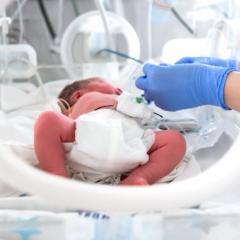
A lack of oxygen (hypoxia) and poor blood supply (ischemia) at
the time of birth is a significant cause of neonatal death and
long-term neurodevelopmental disability. Babies who survive a
hypoxic/ischemic (HI) insult are at increased risk of seizures and
cerebral palsy leading to lifelong neurological deficits affecting
cognitive, learning and motor abilities. Present strategies for
detection and treatment of HI and seizures in the neonate are
extremely inadequate.
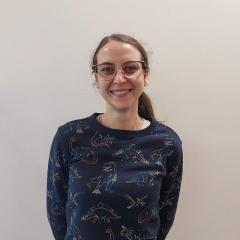
Dr Tracey Björkman is a Lions Senior Medical Research
Fellow studying hypoxic brain injury in the newborn.
Dr Björkman's research interests include GABA and glutamate
neurotransmission, and excitotoxic mechanisms of cell injury in the
neonatal brain. An understanding of normal brain development and
the pathways through which brain injury occurs will allow more
appropriate neuroprotective therapies to be implemented, thus
minimising hypoxic-ischemic brain damage and reducing long-term
disability.
Dr Björkman's research
interests are:
- Perinatal GABAA receptor development
- GABA mediated excitotoxicity in immature brain
- Seizures and injury following hypoxia
- Neuroprotective therapies for newborn hypoxic brain
|
Research Projects
Results from our previous research suggest that seizures are
associated with a much greater degree of brain damage following a
hypoxic/ischemic (HI) insult than HI damage alone. Given that over
50% of seizures in neonates are 'silent' this may be of major
consequence; the dependence on clinical signs of seizure in the
neonatal ICU means that there is an enormous risk for 'silent'
seizures to go undetected and therefore untreated in more than half
of term HI babies.
However despite widespread clinical use, anticonvulsant drugs do
not effectively treat seizures in the newborn brain. In adults
anticonvulsants activate brain receptors and decrease
brain activity, however in neonates the same anticonvulsants may
increase brain activity potentially worsening seizures and
HI brain damage. My current research focus is to understand the
intrinsic differences in neonatal brain receptors. This will
underpin future studies to develop new treatments to protect the
newborn brain.
|
Key publications
V.P. Kalanjati, S.M. Miller, Z. Ireland, P.B. Colditz,
S.T. Bjorkman (2011) Developmental expression and
distribution of the GABAA receptor a1,
a3 and b2 subunits in perinatal pig brain.
Dev Neurosci May 25 DOI: 10.1159/000326630
S.T. Bjorkman, S.M. Miller, S.E. Rose, C Burke,
P.B. Colditz (2010) Seizures are associated with brain injury
severity in a neonatal hypoxia-ischemia model.
Neuroscience 161(1):157-67.
Bjorkman ST, Foster KA, O'Driscoll SM, Healy
GN, Lingwood BE, Burke C, Colditz PB. (2006)
Hypoxic/Ischemic models in newborn piglet:
comparison of constant FiO2 versus variable
FiO2 delivery. Brain Res. 1100: 110-117.
|
Contact details and email
Dr Tracey Bjorkman BSc PhD
Perinatal Research Centre
UQ Centre for Clinical Research
RBWH, Herston Q 4029
t.bjorkman@uq.edu.au
Ph 61+7+3346 6015
Fax 61+7+3346 5594
|
Funding acknowledgement
NHMRC
UQECR
Lions Medical Research Foundation
|
Technique Expertise
Neonatal HI animal models
Protein expression
Molecular biology techniques
Research Staff
Ms Stephanie Miller BSc (Hons)
Senior Research Assistant
Dr Xiyong Fan MD PhD
Research Officer
Mr Nick Ward BSc (Hons)
Research Assistant
|
Collaborations
Dr
Cacha Peeters-Scholte (Neurophyxia B.V., Netherlands)
Mr Paul
Leufkens (Neurophyxia B.V., Netherlands)
Dr Rod
Hunt (RCH, Melbourne)
Dr Tim
Donovan (RBWH, Brisbane)
Dr
Geraldine Boylan (Ireland)
Dr
Peter Dodd (SCMS, UQ)
Prof
Seong-Seng Tan (Howard Florey Institute, Melbourne)
|
Key Words
Medical: Receptors, Medical: Perinatal Disorders, Medical:
Neuropathology, Medical: Ion Channels, Medical: Injury, Medical:
Anticonvulsants, Medical: Neonatal Disorders, Medical:
Neurotransmitters, Medical: Brain, Medical: Animal Model, Medical:
Perinatal Health
|